


There are hormones we only think about when something goes wrong. When we can't sleep, crave sweets at ten o'clock at night, or when our mood drops for no apparent reason. Among them are serotonin and melatonin. Two conductors of our emotional state, working quietly but deciding a lot.
Serotonin is often called the "happiness hormone." This is a simplification, but there is truth in it. It is responsible for mood stability, an inner sense of calm, the ability to concentrate, and even appetite control. When serotonin levels drop, a person may feel anxiety, irritability, apathy. The world becomes heavier. Reactions become sharper. Decisions become more impulsive.
Melatonin is another player. It is called the sleep hormone. But in reality, it is a regulator of biorhythms. It determines when the body switches to recovery mode. When cells begin "repair," and the brain clears itself of informational noise. If there is not enough melatonin, sleep becomes shallow. And without deep sleep, the nervous system does not reboot. And mood starts to fluctuate.
The most interesting thing is that these two hormones are connected. And it all starts not with them.
It starts with the amino acid L-tryptophan.
L-tryptophan is an essential amino acid. The body cannot synthesize it on its own, so we get it only from food or supplements. It is from tryptophan that serotonin is synthesized in the body. And from serotonin — melatonin. The chain is simple but strategic. If the raw material is lacking at the start, the final result will be weak.
When tryptophan levels are sufficient, the brain has the resource to produce serotonin. A person feels stable. Cravings for sweets decrease, as serotonin deficiency often triggers evening "breakdowns." Anxiety levels drop. Concentration improves. Emotions become more balanced.
Then the second stage kicks in. In the dark hours, part of the serotonin transforms into melatonin. And if nothing blocks this process — sleep comes naturally. Without tension. Without racing thoughts. Without inner anxiety.
Modern people live under constant nervous system exhaustion. Screen light until midnight, chronic stress, information overload, irregular eating — all affect brain biochemistry. Serotonin levels fall. Melatonin production worsens. A feeling of emotional instability appears.
And here it is important to understand: it’s not about "character." Not about "weak will." Often — it’s about biochemistry.
That is why amino acids play a key role in supporting emotional state. They are the foundation. Without them, proper neurotransmitter function is impossible.
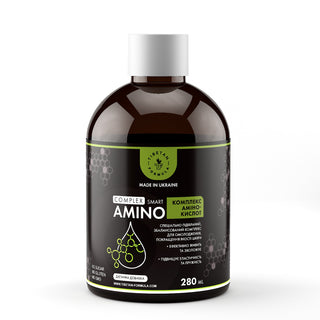
Special attention deserves L-tryptophan from the "Tibetan Formula." The product contains L-tryptophan — an essential amino acid important for processes in the body. The amino acid is linked to the production of the hormone serotonin, which affects good mood. It participates in the synthesis of niacin, which ensures a calm state, and melatonin — the hormone responsible for biorhythms in the human body. It may have a calming effect on the nervous system, regulate appetite, support weight loss, and help reduce cravings for harmful habits.
Who should pay attention to supporting tryptophan?
Those who often feel anxiety without an obvious reason. Those who have difficulty falling asleep or wake up during the night. Those who constantly crave sweets in the evening. Those experiencing chronic stress or periods of emotional exhaustion.
This is especially relevant for women over 30. Hormonal balance changes. Stress levels increase. Responsibilities grow. And the nervous system’s resources are not unlimited.
At the same time, it is important to remember: serotonin is not produced in a vacuum. Its synthesis also requires B vitamins, magnesium, and sufficient protein in the diet. Daylight and darkness at night are needed. Movement is needed. Biochemistry works as a whole. But if the foundation is weakened — it must be restored starting with the basic elements. With amino acids.
When we talk about self-care, we are not just talking about a vacation or a scented candle. We are talking about supporting the nervous system at the cellular level. Serotonin gives us a sense of inner support. Melatonin — the ability to recover. Amino acids — the material from which all this is built.
Sometimes it’s enough to give the body what it lacks. And mood evens out. Sleep becomes deeper. Thoughts become clearer.
Biochemistry is our daily state. And it starts with small molecules that work for us — if we give them a chance.